

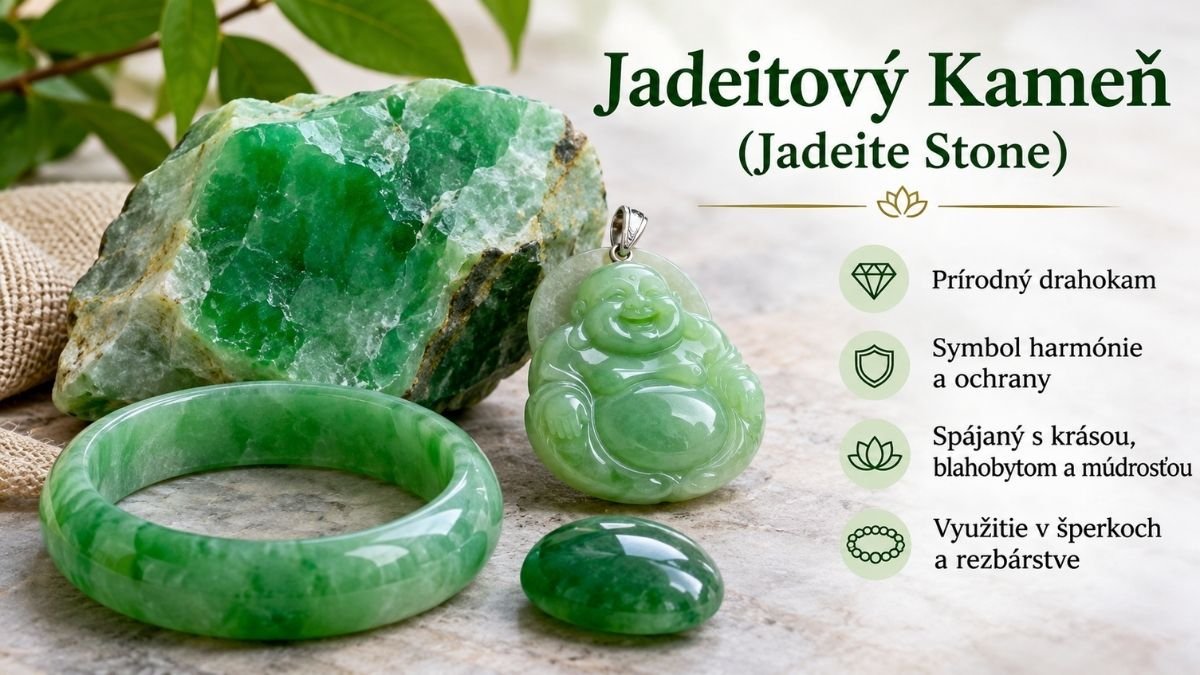
Jadeitový Kameň refers to jadeite stone, a distinctive gemstone admired for its rich colors, remarkable toughness, and long history in decorative art and jewelry. Although green jadeite is particularly famous, the mineral also appears in white, lavender, yellow, orange, and other shades. Its appearance can range from nearly opaque to beautifully translucent, giving individual stones noticeably different qualities.
The Slovak expression jadeitový kameň translates to jadeite stone. Beyond its mineralogical meaning, the phrase also appears in beauty-product descriptions for small jade stones used during eyelash-extension applications.
Understanding jadeite requires looking beyond its attractive appearance. Its geological formation, cultural importance, treatment history, and identification all influence how the material is appreciated and valued. This guide examines the verified characteristics of Jadeitový Kameň, explains its relationship to other jade materials, and offers practical guidance for buyers, collectors, and anyone interested in natural gemstones.
What Is Jadeitový Kameň?
Jadeitový Kameň is the Slovak term for jadeite stone, a natural mineral belonging to the pyroxene family. In gemstone form, jadeite commonly occurs as a compact material containing tightly interlocking mineral crystals. This structure contributes to its exceptional toughness and makes it suitable for intricate carving.
Jadeite is one of the principal materials known commercially as jade. The other major variety is nephrite, which differs in mineral composition despite sharing a similar appearance and cultural history.
One of jadeite’s defining characteristics is its combination of durability and visual depth. Fine specimens can display a rich green color with enough translucency to allow light to penetrate the surface. Other examples have cloudy, mottled, or contrasting patterns.
These natural variations help explain why two pieces of jadeite can look remarkably different. A pale, opaque stone and a vivid, translucent green gemstone may both be genuine jadeite, although their commercial values can differ substantially.
Natural Origins and Geological Formation
The geological history of jadeite begins deep within the Earth’s crust, where particular combinations of high pressure and relatively low temperature allow jadeite-bearing rocks to develop.
Such conditions commonly occur in geological environments associated with subduction, where one tectonic plate moves beneath another. The resulting metamorphic processes can produce jadeite-containing mineral assemblages.
Gem-quality jadeite occurs in several locations worldwide. Myanmar is especially well known for producing the vivid green material collectors and jewelry specialists seek. Jadeite also occurs in regions including Guatemala, Japan, Russia, and parts of Europe.
The gemstone is not defined simply by where it originates. Its mineral composition, internal texture, color, and transparency determine its identity and influence its quality.
For collectors, geographical origin can contribute to a stone’s documented history. However, origin alone does not establish authenticity or guarantee exceptional quality.
Jadeite Versus Nephrite: Understanding the Difference
A common misunderstanding surrounding Jadeitový Kameň is that all jade belongs to a single mineral species.
In conventional gemstone classification, jadeite and nephrite are distinct materials. Jadeite is a sodium aluminum silicate belonging to the pyroxene group, while nephrite consists primarily of amphibole minerals in the tremolite-actinolite series.
Jadeite generally registers between 6.5 and 7 on the Mohs hardness scale. Nephrite usually measures approximately 6 to 6.5.
Both materials are notably tough, meaning they resist breaking or chipping even though they are not among the hardest gemstones.
Jadeite is particularly appreciated for its potential to display brilliant colors and attractive translucency. Nephrite often features more subdued green tones, although its natural color range is also broad.
Neither material should automatically be dismissed as inferior. Historical importance, artistry, appearance, and provenance all contribute to appreciating jade objects.
Understanding the difference is especially useful when evaluating jewelry advertised simply as jade.
Colors, Appearance, and Quality of Jadeitový Kameň
The color most frequently associated with jadeite is green, but genuine jadeite is not always green.
Natural jadeite may appear white, lavender, yellow, orange, red, brown, grey, or black. Individual pieces can also contain more than one color, creating distinctive patterns.
Among highly valued varieties, imperial jadeite is particularly famous. This term describes exceptional material displaying a vivid emerald-like green appearance, attractive translucency, and fine texture.
Gemstone specialists assess jadeite using several important characteristics.
Color is a major consideration, including hue, saturation, tone, and overall distribution. Transparency also matters because light penetration can create an appealing sense of depth.
Texture describes the apparent fineness and uniformity of the material’s internal structure. Smooth polishing and careful carving can further enhance the finished appearance.
Cracks, visible damage, and certain treatments may influence value.
No single characteristic determines the quality of every jadeite object. A collector evaluating an antique carving, for example, may consider its artistic and historical importance alongside the stone itself.
Historical and Cultural Significance
Jade occupies an important place in the history of several civilizations, especially in East Asia and Mesoamerica.
In ancient China, jade was used to create ceremonial objects, ornaments, tools, and decorative carvings. Much of the earliest Chinese jade tradition involved nephrite rather than jadeite.
Jadeite later became particularly desirable in Chinese markets as material from Myanmar entered established trading networks.
By the nineteenth century, jadeite was an important gemstone in sophisticated carving and jewelry traditions. Its vivid colors and potential translucency contributed to its popularity.
Jade also held considerable importance in parts of ancient Mesoamerica, where it appeared in ornaments, ceremonial items, and objects associated with social distinction.
These histories should not be treated as interchangeable. Different cultures developed their own artistic practices and interpretations of jade.
The gemstone’s enduring appeal reflects both its physical properties and the meanings that societies have attached to it over many centuries.
Traditional Symbolism and Beliefs About Jadeite
Jadeitový Kameň is frequently associated with traditional ideas of harmony, prosperity, protection, and wisdom.
Such associations are especially familiar in cultural and commercial descriptions of jade jewelry.
In Chinese traditions, jade has been connected with virtue, moral character, and refinement. Jade objects have also carried ceremonial or symbolic significance.
Modern gemstone retailers sometimes describe jadeite as a stone that encourages emotional balance, attracts good fortune, or provides spiritual protection.
These statements fall within cultural belief and personal symbolism. They should not be confused with scientifically demonstrated properties.
No established clinical evidence shows that wearing jadeite alone treats disease, eliminates stress, or produces predictable changes in physical health.
People may nevertheless value jade jewelry because of its cultural associations, personal meaning, or aesthetic qualities.
Understanding this distinction allows readers to appreciate traditional beliefs without mistaking them for verified medical claims.
Jewelry and Practical Applications
One reason jadeite remains popular is its versatility.
Jewelers use the material to create bracelets, pendants, rings, earrings, beads, and decorative accessories. Its toughness also allows skilled artisans to produce detailed carvings.
A polished jadeite bangle is a particularly recognizable form of jewelry. Other traditional designs include discs, small sculptural figures, and ornamental pendants.
Fine jadeite is often polished into rounded shapes rather than cut into the highly faceted forms associated with diamonds.
This approach can showcase the gemstone’s natural color, texture, and translucency.
The term Jadeitový Kameň also appears in a separate practical context: eyelash-extension accessories.
Some beauty suppliers sell small, flat jade stones designed to hold eyelash adhesive during application. These are marketed as reusable surfaces that can help moderate temperature changes around a small quantity of adhesive.
Such products should not automatically be assumed to contain certified gem-quality jadeite. Their composition, effectiveness, and cleaning requirements depend on the particular product.
For professional cosmetic use, the adhesive manufacturer’s instructions and appropriate hygiene procedures remain essential.
How to Recognize Genuine Jadeite Stone
Identifying genuine jadeite requires more than examining its color.
Several green gemstones and ornamental materials can resemble jadeite. Dyed stones, glass, and other imitations may appear convincing to an inexperienced buyer.
Natural jadeite can also undergo treatments intended to improve its appearance.
In the jade trade, classifications commonly include Type A, Type B, and Type C.
Type A generally refers to natural jadeite without significant color or structural enhancement, although traditional surface waxing may be permitted.
Type B describes jadeite that has typically undergone acid bleaching followed by polymer impregnation.
Type C refers to dyed material. Some jewelry may have undergone both polymer impregnation and dyeing.
These categories describe treatments rather than a universal ranking of natural beauty.
Simple visual inspection cannot reliably identify every treatment or imitation.
For expensive purchases, testing by a reputable gemological laboratory provides more dependable evidence than home identification methods.
Choosing a Quality Jadeitový Kameň
Buying jadeite becomes easier when the seller provides accurate information about the material.
A sensible first step is to establish whether the product is jadeite, nephrite, or another gemstone marketed under a jade-related name.
Next, examine its color, transparency, finish, and overall condition. Visible fractures and poorly executed polishing may affect both appearance and desirability.
For higher-value jewelryjewelry, request documentation that identifiesthat identifies the material and discloses anydiscloses detectable treatments.
Buyers should also distinguish between a seller’s opinion and a laboratory finding. Descriptive language such as rare, imperial, or natural is not a substitute for appropriate verification.
Price comparisons should involve genuinely comparable pieces. Size, quality, carving, treatment, and documented origin can influence how much a buyer is willing to pay.
A thoughtful purchase is based on the stone’s characteristics, trustworthy disclosure, and personal preferences, not exaggerated marketing promises.
How to Care for Jadeite Jewelry
Although jadeite is remarkably tough, responsible handling helps preserve its appearance.
The Gemological Institute of America recommends gentle cleaning with warm, soapy water and a soft cloth or suitable soft brush.
This approach is particularly sensible when a stone’s treatment history is unknown.
Avoid exposing jadeite jewelry to harsh chemicals or unnecessary temperature extremes. Treated gemstones may be more sensitive to particular cleaning conditions than untreated examples.
Store jewelry carefully so harder objects do not scratch its polished surface.
Rings and bracelets should also be protected from avoidable impacts, especially when the setting contains delicate components.
If a valuable piece becomes damaged or develops a concerning surface change, seek advice from a qualified jewelry professional rather than attempting aggressive home restoration.
Conclusion
Jadeitový Kameň represents much more than an attractive green stone. Jadeite combines a distinctive geological origin with remarkable toughness, a diverse natural color range, and a history that connects gemstone craftsmanship with cultural traditions.
Its appeal can be appreciated through scientific understanding as well as artistic and historical context. RecognizingRecognizing the differences between jadeite and nephrite, understanding common gemstone treatments, and carefully evaluating seller claims are essential steps toward making informed decisions.
Whether purchased as jewelryjewelry, studied as a mineral, or admired as a carved object, genuine jadeite offers lasting interest through its natural characteristics and the craftsmanship it supports.
The most reliable way to appreciate Jadeitový Kameň is to separate verified gemstone facts from traditional symbolism and commercial claims, letting its beauty and significance speak for themselves.
(FAQs)
1. What does Jadeitový Kameň mean?
Jadeitový Kameň is a Slovak expression meaning jadeite stone. It refers to a natural gemstone material and is also used to describe certain beauty accessories.
2. Is Jadeitový Kameň a real gemstone?
Yes. Jadeite is a recognizedrecognized mineral in the pyroxene group. However, products carrying the name should be assessed individually because commercial names alone do not verify their composition.
3. What color of jadeite is the most valuable?
Exceptional vivid green jadeite, especially fine imperial jadeite with attractive translucency and texture, is generally among the most highly valued varieties.
4. Is jadeite the same as nephrite?
No. Jadeite and nephrite are different mineral materials, although both are traditionally recognized as jade. Their chemical compositions, structures, and some physical properties differ.
5. Can jadeite be worn every day?
Jadeite’s toughness makes it suitable for many forms of everyday jewelry. Nevertheless, it can still be scratched or damaged, so careful handling and appropriate cleaning are recommended.