


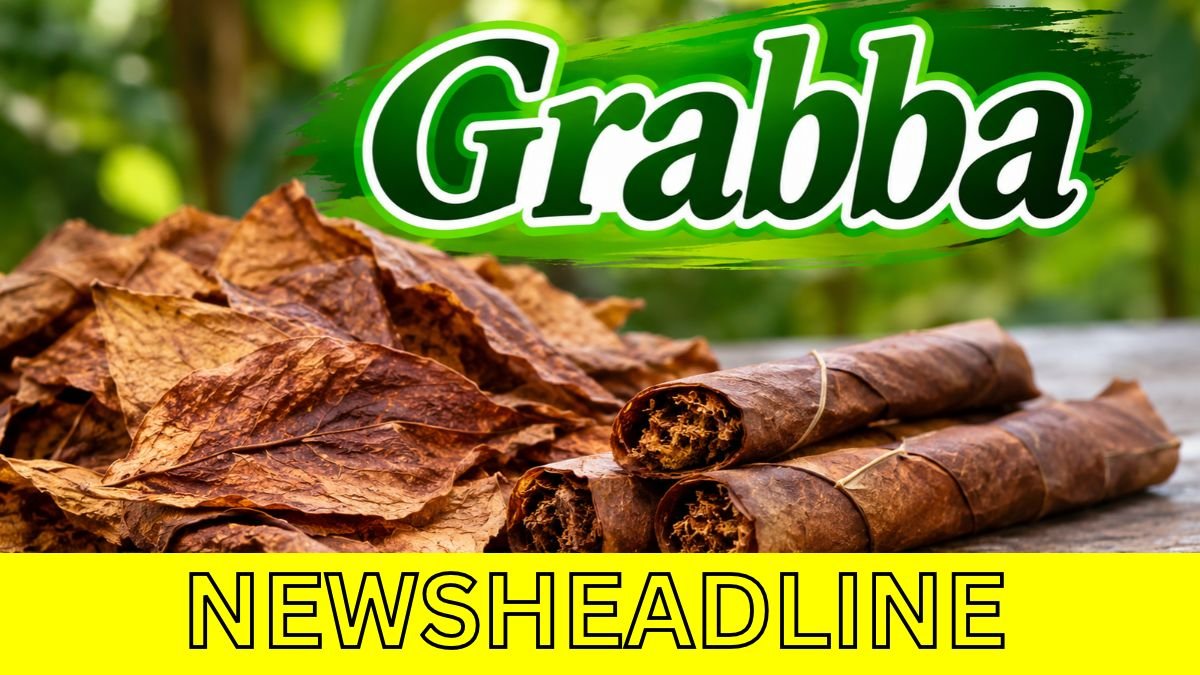
Grabba is a term closely associated with Caribbean tobacco culture, particularly in Jamaica, where it commonly describes dried or raw tobacco leaves. Although the expression appears in online conversations and popular culture, its meaning is not immediately obvious to everyone unfamiliar with Caribbean terminology.
Unlike a conventional cigarette brand, Grabba generally refers to a form of tobacco rather than a specific manufactured product. It is also associated with smoking practices involving cannabis, although tobacco and cannabis are fundamentally different substances.
Understanding Grabba requires separating cultural terminology from commercial descriptions and established medical evidence. Jamaican public health authorities and academic researchers have documented its use, particularly in discussions surrounding tobacco consumption and substance-related health concerns. Despite its natural appearance, Grabba contains addictive nicotine and carries significant health risks when smoked.
What Is Grabba?
Grabba is a Caribbean expression commonly used to describe dried tobacco leaves. In Jamaican speech, the word can refer to raw tobacco or tobacco associated with particular smoking practices.
The term does not identify a single tobacco plant variety, manufacturer, or internationally standardized product. Its meaning can vary by region and by commercial terminology.
Academic research examining substance use in Jamaica has identified Grabba as dried tobacco leaves associated with cannabis consumption. This provides an independent explanation of the expression beyond commercial product descriptions.
The most significant fact about Grabba is that it remains a tobacco product, regardless of its appearance, packaging, or cultural background.
The Origins and Cultural Background of Grabba
Jamaican Roots
Grabba has strong associations with Jamaican language and smoking culture. The expression appears in Jamaican Creole terminology and has been documented in local public health reporting.
In 2015, the Jamaica Information Service published coverage discussing Grabba alongside concerns about substance use and tobacco-related illnesses. These reports establish that the expression was already recognized in Jamaican public health discussions more than a decade ago.
However, a precise date for the word’s invention, or an individual responsible for introducing it, has not been reliably established.
Caribbean Cultural Identity
Regional expressions often reflect local traditions and everyday language. Grabba is an example of terminology whose meaning can be difficult to understand without its cultural context.
Recognizing these linguistic associations does not require endorsing tobacco consumption. Cultural significance and medical safety are separate considerations, and an accurate explanation should acknowledge both.
Understanding Modern Terminology
Commercial websites sometimes use Grabba as a product name, while other sources describe it as a general tobacco category. These different interpretations can confuse readers researching the term.
A product label alone cannot establish the precise chemical composition, nicotine concentration, or safety of the tobacco it contains.
Difference Between Grabba and Fronto Leaf
Grabba and Fronto are closely related expressions in tobacco terminology. However, their definitions are not universally consistent.
Fronto generally refers to a whole cured tobacco leaf, while Grabba frequently describes tobacco leaves in smaller or fragmented forms. Some communities and sellers use both expressions interchangeably.
| Feature | Grabba | Fronto Leaf |
|---|---|---|
| Typical form | Whole or fragmented tobacco | Whole tobacco leaf |
| Contains nicotine | Yes | Yes |
| Terminology | Varies regionally | Varies regionally |
| Addiction potential | Present | Present |
| Health risks | Present | Present |
Neither term identifies a medically safer category of tobacco. Differences in appearance or physical form do not remove the risks associated with smoking.
Is Grabba the Same as Cannabis?
No. Grabba and cannabis are different substances derived from different plants.
Grabba ordinarily refers to tobacco, which naturally contains nicotine. Cannabis contains cannabinoids, including tetrahydrocannabinol (THC), which is responsible for its characteristic intoxicating effects.
The association between the two substances comes from documented smoking practices in Jamaica, where tobacco and cannabis are sometimes consumed together.
A peer-reviewed study published in 2022 on substance use in Jamaica acknowledged this association. However, the existence of a combined consumption practice does not mean that tobacco itself is cannabis.
Combined consumption can also increase exposure to harmful substances, creating additional health concerns.
Does Grabba Contain Nicotine?
Yes. Because Grabba is tobacco, it naturally contains nicotine.
Nicotine is a highly addictive substance that can lead to physical dependence. Regular exposure may result in cravings and difficulty stopping tobacco consumption.
No single verified nicotine measurement applies to every product described as Grabba. Tobacco characteristics, cultivation conditions, and processing methods can influence its chemical composition.
Why Nicotine Dependence Matters
Dependence can develop even when tobacco consumption begins occasionally. Once dependence develops, reducing or stopping consumption may produce withdrawal symptoms.
These can include irritability, restlessness, cravings, and difficulty concentrating.
The World Health Organization identifies nicotine addiction as a major public health concern, particularly among adolescents and young adults.
Health Risks Associated With Graba
The natural appearance of a tobacco leaf should not be confused with medical safety. Burning tobacco produces smoke containing toxic substances that can damage the body.
Respiratory Health
Exposure to tobacco smoke can harm the respiratory system. Long-term smoking is associated with serious conditions, including chronic obstructive pulmonary disease and lung cancer.
Cannabis smoke also contains harmful chemicals and respiratory irritants. Consuming tobacco and cannabis together can increase exposure to these substances.
Cardiovascular Health
Tobacco consumption is an established risk factor for cardiovascular disease. Exposure to tobacco smoke can damage blood vessels and contribute to serious heart-related conditions.
The absence of conventional cigarette packaging does not eliminate these concerns.
Second-Hand Smoke
The health effects of tobacco consumption extend beyond the individual smoker. People exposed to second-hand smoke can also experience harmful consequences.
Children and individuals with existing respiratory conditions are among those particularly vulnerable to smoke exposure.
Is Natural Tobacco Safer?
The World Health Organization maintains that tobacco consumption is harmful in every form and that no exposure level can be regarded as safe.
Descriptions such as natural, organic, or unprocessed should therefore not be interpreted as evidence that a tobacco product is harmless.
Common Misconceptions About Grabba
Grabba Is Nicotine-Free
This is incorrect. Tobacco naturally contains nicotine, even when it has undergone relatively little processing.
Grabba Is a Type of Cannabis
Grabba generally refers to tobacco rather than cannabis. Their association arises from documented combined consumption practices.
Natural Leaves Are Harmless
Natural origin does not establish medical safety. Tobacco leaves contain addictive substances, and burning them creates harmful smoke.
All Grabba Products Are Identical
Grabba is not a universally standardized tobacco classification. Products carrying the name may differ in physical characteristics, composition, and processing.
Grabba and Responsible Public Health Awareness
Reliable information about Grabba should distinguish established scientific findings from commercial claims and informal online discussions.
Public health organizations provide a stronger foundation for understanding tobacco-related risks than promotional descriptions or personal testimonials.
People experiencing nicotine dependence can seek professional support from healthcare providers or smoking cessation services. Evidence-based treatments and behavioral support may help individuals stop smoking.
Understanding Grabba’s cultural background is valuable, but it should never come at the expense of accurate health information.
Final Thoughts
Grabba is a tobacco-related expression with documented connections to Jamaican language and Caribbean smoking culture. Understanding its meaning helps readers distinguish tobacco terminology from cannabis, commercial branding, and unsupported online claims.
Although Grabba may look different from conventional cigarettes, its natural origin does not make it harmless. Nicotine dependence, respiratory illness and cardiovascular disease remain significant concerns.
A responsible understanding of Grabba should be grounded in cultural awareness, verified scientific information, and recognition of the established health risks associated with tobacco consumption.
(FAQs)
1. What does Grabba mean?
Grabba is a Caribbean expression commonly associated with dried or raw tobacco leaves, particularly in Jamaican terminology.
2. Where did Grabba originate?
The expression has strong Jamaican and wider Caribbean associations. Its exact historical origin and first recorded use have not been conclusively established.
3. Does Grabba contain nicotine?
Yes. Grabba is tobacco and naturally contains addictive nicotine.
4. Is Grabba different from Fronto?
Fronto usually describes whole cured tobacco leaves, while Grabba often refers to tobacco in fragmented forms. However, terminology varies between communities.
5. Is Grabba safe to smoke?
No. Smoking tobacco exposes the body to harmful substances and increases the risk of addiction and serious diseases.