


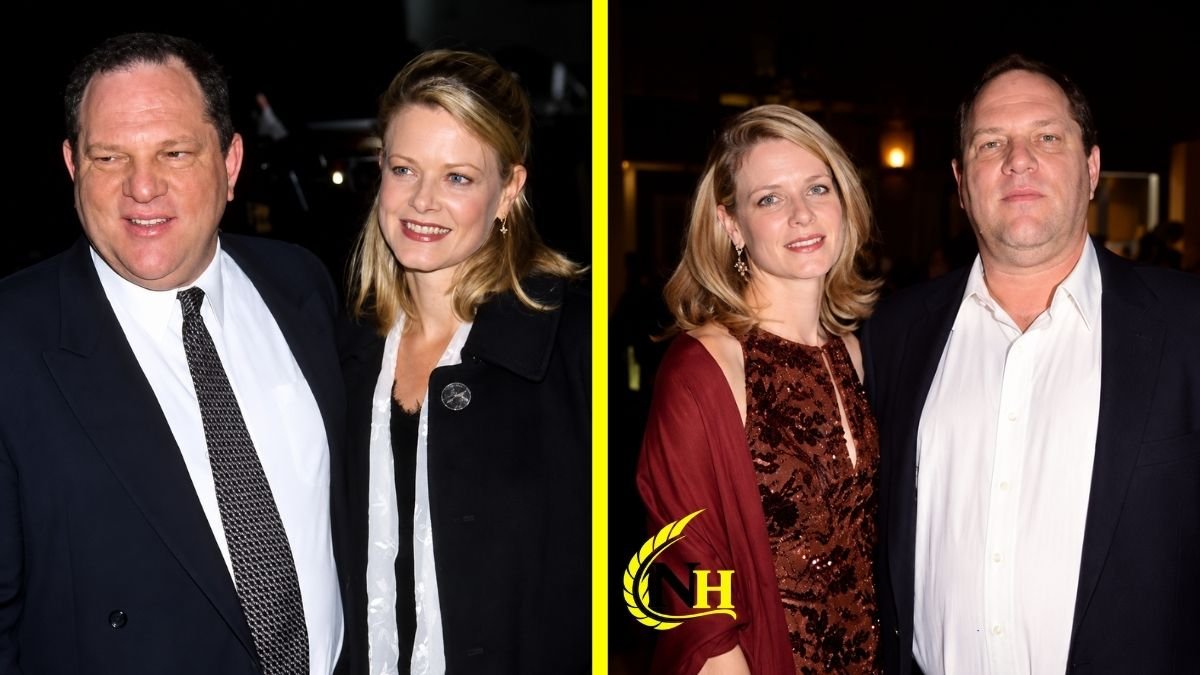
Eve Chilton is best known as the first wife of former Hollywood film producer Harvey Weinstein, but her public history extends beyond that Relationship. She worked at Miramax during the company’s formative years, married Weinstein in 1987, and raised three daughters before their divorce in 2004. More than a decade later, she returned to newspaper headlines through a dispute over financial arrangements for their children. Although Weinstein’s criminal cases transformed the public understanding of his Hollywood career, Chilton has largely stayed out of the spotlight, leaving a relatively limited but revealing public record of her own life.
Profile Summary
| Detail | Information |
|---|---|
| Full Name | Eve Chilton |
| Also Known As | Eve Chilton Weinstein |
| Nationality | American |
| Known For | First wife of Harvey Weinstein |
| Professional Background | Former Miramax assistant |
| First Marriage | Harvey Weinstein, 1987 |
| Divorce | 2004 |
| Marriage Duration | Approximately 17 years |
| Children | Three daughters |
| Daughters’ Names | Remy (formerly Lily), Emma and Ruth |
| Later Relationship | Reportedly married Sal Martirano |
| Public Profile | Largely private |
| Current Net Worth | Not independently verified |
Who Is Eve Chilton?
Eve Chilton entered public life through her association with Miramax, the film company Harvey and Bob Weinstein established in 1979. She worked as an assistant in the mid-1980s, as the business built its position in independent film distribution. Her connection to Harvey Weinstein subsequently became personal, and the couple married in 1987. Their Relationship lasted through a period when Miramax shifted from an influential independent distributor to a major force in American cinema. While Harvey became a prominent and powerful producer, Chilton’s public role was considerably more restrained. She occasionally appeared alongside him at industry functions but did not build the same kind of public-facing career.
Much of the biographical information circulated about her today comes from retrospective coverage of Weinstein’s personal history. That creates an important distinction between independently documented events and details repeated by celebrity websites. Her marriage, children, divorce year, and involvement in later financial proceedings are well established. Other details, including precise personal wealth, aspects of her upbringing and present-day circumstances, are less securely documented.
Early Career at Miramax and the Beginning of Her Marriage
During the 1980s, Miramax operated in a film industry where independent distributors were increasingly finding opportunities beyond the conventional Hollywood studio system. The Weinstein brothers built their reputation by acquiring, marketing, and distributing films that might otherwise have struggled to reach wide audiences. As an assistant, Chilton worked within this expanding business, although detailed public documentation of her responsibilities and professional achievements remains limited.
Accounts of the couple’s Relationship indicate that they became involved while working at Miramax. Their 1987 marriage preceded some of the company’s most commercially and critically successful years. Disney acquired Miramax in 1993, and the studio subsequently became associated with prominent productions including Pulp Fiction, The English Patient and Shakespeare in Love.
Chilton’s presence during this period provides historical context, but it should not be mistaken for evidence that she directly shaped those films or their commercial success. A responsible account separates proximity to a major entertainment business from documented creative or executive responsibility.
Eve Chilton and Harvey Weinstein: A Marriage That Lasted 17 Years
The couple’s marriage unfolded during Weinstein’s rise to extraordinary influence within the entertainment industry. His position brought access to major filmmakers, actors, awards ceremonies, and exclusive professional gatherings. Photographs from the period show the couple appearing together at premieres and other formal events, providing a public record of their Relationship.
Their marriage also included the birth of three daughters, adding family responsibilities to the demands of Weinstein’s expanding career.
Their Divorce in 2004
Chilton and Weinstein divorced in 2004, ending approximately 17 years of marriage. Reports about the breakup have frequently referred to Weinstein’s relationships with other women, but the private reasoning behind the divorce should not be reduced to an unverified single explanation.
The timing is especially significant. Their marriage ended 13 years before the major 2017 investigations that exposed allegations of sexual harassment and assault against Weinstein. Those revelations changed how his earlier career was viewed, but they should not automatically be treated as proof of what Chilton knew, experienced, or considered when her marriage ended.
Following the divorce, Weinstein continued his career and married fashion designer Georgina Chapman in 2007. Chilton, meanwhile, became far less visible in mainstream entertainment coverage.
Her Three Daughters: Remy, Emma and Ruth
One of the most consistently documented aspects of Eve Chilton’s personal history is her motherhood. She and Weinstein have three daughters:
- Remy Weinstein, formerly known as Lily, born in 1995.
- Emma Weinstein, born in 1998.
- Ruth Weinstein, born in 2002.
The daughters grew up during a period of considerable professional success for their father. Their parents’ divorce took place when all three were still children, meaning later financial arrangements necessarily included ongoing parental responsibilities.
Unlike children who pursue entertainment careers independently, the three daughters have generally maintained relatively limited public profiles. Some information about them emerged during reporting on Weinstein’s legal troubles, but their family connection does not make every detail of their personal lives a matter of legitimate public interest.
This distinction matters particularly when revisiting historical disputes. Journalists can report accurately on financial proceedings involving their parents without speculating about the daughters’ current relationships, personal views, or private circumstances.
Divorce Settlement and the Central Park West Apartment
Chilton’s divorce became associated with substantial New York real estate holdings, reflecting the considerable wealth accumulated during Weinstein’s Hollywood career.
Contemporary property reporting provides a more reliable picture than many later celebrity net-worth articles. In August 2006, The Observer reported that Chilton had acquired ownership of the former marital duplex at 88 Central Park West following the divorce. The property was listed for $25 million, while she separately purchased an apartment at 1133 Fifth Avenue for about $10.4 million.
A later Wall Street Journal account concerning Robert De Niro and Grace Hightower identified a purchase price of approximately $20.9 million for the former Central Park West property in 2006.
These figures illustrate why financial reporting requires careful distinctions. A property’s asking price is not its eventual sale price, and a transferred home’s value is not necessarily the value of an entire divorce settlement.
Although online profiles have published substantial estimates of Chilton’s wealth, no sufficiently comprehensive, current financial documentation establishes her personal net worth. Assigning her a definitive fortune based on old real estate transactions would therefore be misleading.
The $5 Million Child-Support Dispute Explained.
Eve Chilton returned to public attention in late 2017 as Weinstein faced mounting allegations, lawsuits, and legal expenses. She sought judicial intervention concerning financial obligations arising from their divorce arrangements.
The key factual distinction is that the widely reported $5 million request concerned an advance on future support payments, not a court finding that Weinstein had already failed to pay $5 million in overdue child support.
What Happened in Court?
According to contemporaneous reporting by Tribune News Service, Chilton’s legal representatives argued that Weinstein’s growing legal expenses could threaten his ability to meet future financial commitments. The requested amount included projected child support, healthcare, educational costs, and other financial obligations.
Her position was essentially preventative: she sought to protect money intended for family-related expenses before other demands might substantially diminish Weinstein’s available assets.
Weinstein’s representatives opposed the application, arguing that he had continued meeting his required payments.
In early January 2018, Manhattan Supreme Court Justice Michael Katz rejected the request for advance payment. Contemporary accounts reported that Weinstein remained obligated to make support payments when due and that Chilton could seek further court intervention if he failed to comply.
The ruling did not eliminate the underlying support obligations. It rejected the attempt to require the proposed early payment at that stage.
Why the Legal Distinction Matters
The dispute demonstrates the difference between enforcing an existing financial obligation and seeking protection against the possibility that a future obligation may not be paid.
In high-profile divorces, these issues can intertwine with litigation costs, property ownership, and changing financial circumstances. Reporting the application simply as an attempt to recover unpaid child support obscures the actual legal disagreement and risks presenting an inaccurate financial history.
Further Financial Proceedings in 2020
The financial Relationship between Weinstein and his former spouses continued to attract attention after the 2018 decision.
In July 2020, ABC News reported that Chilton and Georgina Chapman had successfully pursued court orders freezing nearly $6 million in Weinstein’s assets. The report was based on court records reviewed by ABC News and information from individuals familiar with the proceedings.
Those actions occurred amid Weinstein’s criminal prosecution, civil litigation and financial difficulties.
They also represented a separate development from Chilton’s unsuccessful 2018 request for advance child support. Both proceedings show why the chronology matters: different court applications can address different financial concerns, even when they involve the same former spouses.
The precise contents of every private settlement arrangement have not been established through publicly accessible documents reviewed for this profile.
How Weinstein’s Criminal Cases Changed the Public Context
Weinstein’s fall from Hollywood prominence began with major investigative reporting published in October 2017. Numerous women subsequently accused him of sexual misconduct, and he faced criminal proceedings in different jurisdictions.
His legal history has included convictions, appeals, retrials, and changes to sentencing outcomes. In September 2026, Reuters reported that a New York judge sentenced him to 15 years in prison following a 2025 retrial conviction involving former production assistant Miriam Haley. That followed the 2024 overturning of his original 2020 New York conviction. Weinstein has denied sexually assaulting anyone.
For an article about Chilton, these developments provide background rather than a substitute for her biography. She should not be held responsible for her former husband’s conduct, nor should readers assume she knew about incidents that became public years after their divorce.
Life After Divorce and Her Reported Second Marriage
After separating from Weinstein, Chilton maintained a substantially quieter public presence. French publication Madame Figaro reported that she subsequently built a relationship with Sal Martirano, who has been identified in biographical coverage as her later husband.
Some secondary websites claim the marriage later ended, while others say the couple remained together. Without reliable recent confirmation, her present marital status cannot be stated definitively.
Similar caution applies to claims about where she currently lives. Historical coverage has linked her to suburban New York, including Rye, but that does not establish a verified current residence.
Authoritative public information about any current professional role is also limited. Claims that she leads a particular company or has a specific independently earned fortune require more evidence than short online profiles typically provide.
Why Eve Chilton’s Story Continues to Attract Interest
Interest in Chilton is closely connected to the reassessment of Harvey Weinstein‘s professional and personal history. As journalists and readers revisit the institutions, relationships, and cultural attitudes surrounding his former position in Hollywood, his earlier marriage naturally becomes part of that historical account.
However, the most informative way to approach her story is through its identifiable milestones rather than unsupported personal speculation.
Her employment at Miramax places her within an important chapter of independent cinema. Her marriage and divorce establish her Relationship to Weinstein’s professional ascent. Property reporting documents part of the financial separation, while subsequent court coverage reveals the continuing importance of family obligations.
Together, these details offer a more substantial understanding of her public record than speculative accounts centered on wealth, appearance, or supposed private revelations.
Conclusion
Eve Chilton’s documented history covers a distinctive period in American entertainment and public life, from Miramax’s expansion to the far-reaching consequences of Harvey Weinstein’s legal downfall. Her 1987 marriage, three daughters, 2004 divorce, and subsequent financial proceedings form a verifiable timeline, but they do not tell the entirety of her personal story.
The strongest account of her life acknowledges both what the record establishes and what it does not. Her former husband’s notoriety explains much of the continuing public interest. In contrast, her limited public presence reminds us not to fill a person’s biography with assumptions simply because the available facts are few.
You might also like:Joseph M. Smith: The Untold Story of His Film Career and Marriage to Jessica Paré
(FAQs)
1. Who is Eve Chilton?
Eve Chilton is an American former Miramax assistant best known as Harvey Weinstein’s first wife. They married in 1987 and divorced in 2004.
2. How many children does Eve Chilton have?
She has three daughters with Harvey Weinstein: Remy (formerly Lily), Emma, and Ruth, born in 1995, 1998, and 2002, respectively.
3. Why did Eve Chilton and Harvey Weinstein divorce?
Their divorce was finalized in 2004. Reports have linked the separation to Weinstein’s infidelity, but the full private circumstances have not been independently established.
4. Did Harvey Weinstein owe his first wife $5 million in child support?
In 2017, Chilton sought about $5 million in advance payments to cover future support and related obligations. A Manhattan judge rejected the application in January 2018.
5. Did Eve Chilton remarry after her divorce?
Published profiles identify Sal Martirano as her subsequent husband. However, reliable recent information confirming her current marital status is limited.
6. What is Eve Chilton’s net worth?
No sufficiently reliable public documentation establishes a definitive current net worth. Reported figures should be treated as unverified estimates.
7. Where is Eve Chilton now?
She has maintained a largely private life. Earlier reports linked her to New York, but her current circumstances have not been independently confirmed.